Showing posts with label Education. Show all posts

Wednesday, 26 April 2017

Zen And The Art Of Motorcycle Maintenance Author Pirsig Dies

Zen And The Art Of Motorcycle Maintenance Author Pirsig Dies

Pirsig

Robert M. Pirsig, who inspired generations to road trip across America with his “novelistic autobiography,” Zen and the Art of Motorcycle Maintenance, died Monday at the age of 88.

His publisher William Morrow & Company said in a statement that Pirsig died at his home in South Berwick, Maine, “after a period of failing health,” reports npr.org.

Pirsig wrote just two books: Zen (subtitled “An Inquiry Into Values”) and Lila: An Inquiry into Morals.

Zen was published in 1974, after being rejected by 121 publishing houses. “The book is brilliant beyond belief,” wrote Morrow editor James Landis before publication. “It is probably a work of genius and will, I’ll wager, attain classic status.”

Indeed, the book quickly became a best-seller, and has proved enduring as a work of popular philosophy. A 1968 motorcycle trip across the West with his son Christopher was his inspiration.

Christopher Lehmann-Haupt reviewed Zen for The New York Times in 1974. “[H]owever impressive are the seductive powers with which Mr. Pirsig engages us in his motorcycle trip, they are nothing compared to the skill with which he interests us in his philosophic trip,” he wrote.

“Mr. Pirsig may sometimes appear to be a greener‐America proselytizer, with his beard and his motorcycle tripping and his talk about learning to love technology. But when he comes to grips with the hard philosophical conundrums raised by the 1960’s, he can be electrifying.”

Pirsig was born in Minneapolis, the son of a University of Minnesota law professor. He graduated from high school at 15 and enlisted in the Army after World War II. While stationed in South Korea, he encountered the Asian philosophies that would underpin his work. He went on to study Hindu philosophy in India and for a time was enrolled in a philosophy Ph.D. program at the University of Chicago. He was hospitalized for mental illness and returned to Minneapolis, where he worked as a technical writer and began writing his first book.

Pirsig also helped found the Minnesota Zen Meditation Center, then lived reclusively and worked on Lila for 17 years before its publication in 1991. “A skilled mechanic, he performed repairs in his home workshop,” writes the publisher. “He taught himself navigation in the days before GPS, and twice crossed the Atlantic in his small sailboat, Aretê.”

The protagonist of Zen attempts to resolve the conflicts between “classic” values that create machinery like the motorcycle, and “romantic” values like the beauty of a country road. He discovers all values find their root in what Pirsig called Quality:

“Quality . . . you know what it is, yet you don’t know what it is. But that’s self-contradictory. But some things are better than others, that is, they have more quality. But when you try to say what the quality is, apart from the things that have it, it all goes poof! There’s nothing to talk about. But if you can’t say what Quality is, how do you know what it is, or how do you know that it even exists? If no one knows what it is, then for all practical purposes it doesn’t exist at all. But for all practical purposes, it really does exist.”


Wednesday, 19 April 2017

UK Currently In Skills Crisis As Young Workers Struggle With Reading And Maths

UK Currently In Skills Crisis As Young Workers Struggle With Reading And Maths

skill

Britain is facing a severe skills shortage as poor education at schools followed by weak training for adults has left young workers struggling to meet basic standards for reading and maths.

Almost every other developed country has had more success in building a skilled workforce, leaving the UK economy at risk of falling behind, according to the Chartered Institute for Personnel and Development (CIPD)

Its analysis found that England and Northern Ireland rank in the bottom four OECD countries for literacy and numeracy among 16-24 year olds, while employers invest less in skills than most other EU countries.

“An ageing population and the need to work longer combined with rapid technological change and automation will require the workforce to continually update their skills to adapt to changing needs,” the report said.

“There is an institutional gap in addressing the training and development needs of workers outside the current vocational education system. This needs to be addressed.”

It comes after business groups urged the Government to focus the industrial strategy on improving productivity, particularly in the UK's poorest areas, with the aim of reducing inequality and boosting living standards.

The Confederation of British Industry called for a greater focus on skills as a crucial step to “fix the foundations” of the economy.

Manufacturing group the EEF warned that almost three-quarters of its firms are concerned that it is difficult to find workers with the necessary skills, which risks holding back economic growth.

Robert Halfon, the minister of state for skills, said the government "has been honest about the skills shortage we are facing".

“We have introduced the apprenticeship levy which will generate £2.5bn of investment in apprenticeship training by 2020," he said.

"In 2019 we will begin to roll out 15 high quality technical education routes and have committed to investing an extra half a billion pounds a year into technical education. In addition, we have invested £170m into Institutes of Technology and £80m on National Colleges.

“These measures will improve national prosperity and encourage people to climb the ladder of opportunity.”

Sunday, 16 April 2017

Government Wasted Millions On Free Schools But Many Of Them Are Now closed

Government Wasted Millions On Free Schools But Many Of Them Are Now closed

Free Schools

The Government has been accused of wasting millions on opening free schools which have subsequently closed.

Analysis of Government data by the National Union of Teachers (NUT) estimated at least £138.5 million had been swallowed by opening 62 free schools, university technical colleges (UTC) and studio schools which have either closed, partially closed, or failed to open at all.

The figures were largely taken from Government transparency websites, as well as Companies House and media reports.

Kevin Courtney, NUT general secretary, said: "These figures make clear that the free school, UTC and studio school programmes were ill-thought policies which, in many cases, resulted in an appalling waste of significant sums of money - in the case of the closed UTCs, an average of £10 million was spent on each school, rising to £15 million in the case of Tottenham UTC.

"That sums of this magnitude have been thrown away at a time when schools across the country are crying out for funding for staff, to provide a broad and balanced curriculum and to ensure essential resources and equipment are available, is criminal.

"Ministers should apologise to teachers and parents."

Education Secretary Justine Greening this week announced more than 130 new free schools had been approved by the Government, the largest number during this Parliament.

The schools will collectively create around 69,000 places for pupils, ministers said.

Free schools are new state schools that are not under local council control and have freedom over areas such as staff pay and the curriculum.

In total, 124 have opened since 2015, with 373 more, including those announced this week, due to open.

The Government has pledged to open 500 new free schools by September 2020.

The NUT said the £138.5 million would fund the employment of 3,680 teachers for a year.

And Mr Courtney warned the figure is likely to be much higher, with some data unavailable.

He said: "The true cost of these policy failures is even greater. There is a human cost in the disruption caused to the education of the thousands of those pupils who attended schools which have closed.

"Usually it is local authorities who have had to pick up the pieces by finding alternative places for the displaced children.

"The NUT's biggest concern is that the Government is intent on proceeding with these programmes despite growing evidence that the UTC and studio schools programmes cannot attract sufficient numbers of pupils.

"Furthermore, as the National Audit Office has highlighted, free schools are an expensive alternative to maintained schools when the cost per place is taken into account and they are often failing to provide places in the parts of the country that most need them.

"The Government has shown that it has completely the wrong priorities for education.

"The ideological drive to introduce markets and competition by creating yet more types of school has been a disaster pursued without thought for its financial cost or the price paid by those children and their families whom the Government has so badly let down.

"It is now time to drop these failed programmes and focus on what works."

A Department for Education spokeswoman said: "There are 1.8 million more children in good or outstanding schools than in 2010 and free schools are playing a vital role in creating those good school places.

"They are popular with parents, ensuring thousands more families have the choice of a good local school.

"The construction costs of a newly-built free school are 29% lower than those built under the previous school building programme.

"They also operate under a much more robust accountability system than council-run schools, meaning we can take swift action to deal with under-performance and, as such, they are currently the highest performing group of non-selective schools."

Shadow education secretary Angela Rayner said: "This is yet more evidence that the Tory Government's free schools programme is a deeply inefficient way to provide the new school places that are desperately needed.

"Billions of pounds of taxpayers' money has been sunk into free schools but there is still little evidence that the Government is creating new places for children in the areas that they are most needed. All of this while existing schools are facing an unprecedented budget crisis.

"Ministers should start ensuring that taxpayers' money is not being wasted and keep their promise to protect the funding that follows every child."

Ms Rayner told The Observer that analysis of data about the 111 free schools that had been approved showed the 20 most deprived areas of the country would get 12 new schools, whereas the 20 least deprived areas would get 18.

Labour told the newspaper the new schools would meet 50% of the requirement for new places in the south east, whereas they would fulfil 2% of the requirement in the north east.

A DfE spokeswoman told the newspaper the analysis "appears to be based on a misunderstanding of the role free schools play in local communities".

Thursday, 13 April 2017

Education Secretary Reveals New Grammar Schools Must Be 'Open To All'

Education Secretary Reveals New Grammar Schools Must Be 'Open To All'

New Grammar Schools

In a speech at St Mary's University in Twickenham, southwest London, Justine Greening set out her vision for a new model of grammar schools which is "truly open for all" and "working for everyone".

Her comments came as a Government consultation found that families excluded from traditional measures of deprivation but with a household income below the national average find it harder to get into outstanding schools.

This also means children in these households do not do as well as their wealthier peers.

The Education Secretary urged grammar schools to change their policies and admit more children from disadvantaged families - describing greater diversity as vital.

Ms Greening said: "The new schools that we will create will support young people from every background, not just the privileged few.

"Young people on free school meals - and those and those eligible for pupil premium. Young people from ordinary families that are struggling to get by."

Children in grammar schools are as likely to be from ordinary working families as children in non-selective schools, according to the Department for Education.

The department defines "ordinary working families" as those on modest incomes who tend to live outside the inner cities - including in suburbs and coastal areas.

New Grammar Schools

Ms Greening said she wants to "knit together" different parts of the education system in a bid to raise attainment - as she believes universities, independent schools, and faith schools have a role in creating "better options for parents".

She added: "I believe that selection - in new, 21st century state grammar schools - will add to the options available to young people - to truly help make the most of their talents."

Labour leader Jeremy Corbyn has dismissed the plans for new grammar schools as "divisive".

On Twitter, he said the Conservatives should scrap the policy and provide more funding for current schools to help children from all backgrounds.

Monday, 27 March 2017

Medical Students Ordered To Resit Exam After Collusion Uncovered

Medical Students Ordered To Resit Exam After Collusion Uncovered

medical

Final year medical students at one of Britain's oldest universities have been told to resit an exam after bosses uncovered evidence of "collusion" among a small number of learners.

Around 270 undergraduate students at the University of Glasgow's medical school were given the news on Monday morning.

The university said the clinical examination they sat earlier this year has now been declared "void" after it emerged a handful of students had shared information about the test using social media.

The students responsible are now facing a disciplinary and fitness to practise process and the fresh exam has been timetabled for early May.

In a statement, a university spokesman said: "The undergraduate medical school at the University of Glasgow has detected evidence of collusion by a small number of final year medical students during their clinical examination.

"The collusion involved sharing of exam information using social media. The responsible students are now subject to disciplinary and fitness to practise procedures, and after consultation with the senate of the University of Glasgow the affected examination has been declared void and a new clinical examination will be set for all final year students.

"This decision has been made in an abundance of caution to ensure that the skills of our students are rigorously and fairly tested before they graduate in medicine."

The new exam will take place at the start of May, with any resits resulting from that paper to be taken later the same month.

The test involved is known as the objective structured clinical examination (OSCE).

It is a practical exam in which students are faced with a number of clinical challenges at different points on a ward.

Professor Matthew Walters, head of the university's school of medicine, dentistry and nursing, said it was "disappointing" to have discovered the data breach - an "unprecedented" experience for the department.

He told Press Association Scotland: "We discovered that there has been a breach of security and that, using social media, a very small number of students were sharing information about this examination.

"In an abundance of caution, and with the interests of the public as our primary concern, we didn't feel we could use that examination as the assessment to ensure that our students are fit and ready to graduate and work on the wards.

"Although we didn't have any evidence that the results of the exam have been compromised, we felt that... the safest course of action was to scrap the exam and put on a whole fresh assessment."

Prof Walters said the resit move has the support of external examiners and the university senate.

It is not expected to affect the overall timetable, which would see students graduate in summer and begin work on the wards in August.

He said there was a "shared sense of disappointment" among students and staff when they were told the news, but also a joint understanding of the importance of having a trusted assessment.

"The class essentially recognise and understand the need for a robust and thorough assessment prior to their graduation and are accepting of the decision to rerun the whole exam," he said.

Prof Walters said the resit plan will involve much administrative work to organise fresh venues, examiners, patients and exam material.

He described the threat posed by social media as a "big deal" for universities generally.

"All medical universities who run OSCE exams have this potential threat and have to take security very seriously," he said.

Tuesday, 14 March 2017

Malala Has Received Conditional Offer From UK's Top University

Malala Has Received Conditional Offer From UK's Top University

Malala

The 19-year-old, who is studying for A-levels, told a conference her focus was on achieving its requirements.

"I have received a conditional offer which is three As," said Malala, who was shot by the Taliban in 2012 for her campaign on girls' rights to education.

Her speech drew a standing ovation from the Association of School and College Leaders conference in Birmingham.

Malala, who narrowly escaped death after being attacked on her way home from school in Pakistan, did not confirm which university had made the offer.

But earlier this year she told Newsweek magazine that she had recently had an interview for a degree place at an Oxford college.

Lady Margaret Hall was the first Oxford college to educate women and former Pakistani prime minister Benazir Bhutto also studied there.

"I'm studying right now," Ms Yousafzai told the conference.

"I'm in Year 13, I have my A-level exams coming and I have received a conditional offer which is three As. That's what my focus is right now and I hope to continue my work and also continue my studies."

She confirmed that alongside her degree, she would continue to work for the Malala Fund, which campaigns for girls across the globe to get a minimum of 12 years quality education.

"My goal is to make sure every child, a girl and a boy, they get the opportunity to go to school.

"It is their basic human right, so I will be working on that and I will never stop until I see the last child going to school.

"And I'm really thankful to you all for you support for encouraging me for my mission.

"That's what makes me and keeps me so strong so thank you so much for that and thank you for giving me the opportunity to speak."

The teenager also provoked laughter from the audience when she revealed she thought she was in trouble when she was called out of a chemistry lesson to be told she was the next Nobel Prize recipient.

She told delegates: "Suddenly, our deputy head teacher appears in the classroom and I'm just quite shocked, because why would she call me? I thought I was in trouble or something.

"She called me outside and I went and she said 'you have won the Nobel Peace Prize', so it was a big surprise, and I said 'thank you'."

Wednesday, 1 March 2017

Dyson Is Set To Open Second Tech Campus In Hullavington

Dyson Is Set To Open Second Tech Campus In Hullavington

Dyson

A new multimillion-pound research and development centre is being opened in Wiltshire by Sir James Dyson.

The new tech campus will be based on a 517-acre former Ministry of Defence (MoD) site at Hullavington.

The vacuum and electronics company is aiming to double its workforce to about 7,000 in the next five or six years.

Sir James said: "After 25 years of UK growth, and continuing expansion globally, we are fast outgrowing our Malmesbury Campus."

The company's headquarters are based in Malmesbury in the Cotswolds.

"The 517-acre Hullavington Campus is an investment for our future, creating a global hub for our research and development endeavours.

"It will enable us to continue creating world-class products and jobs right here in the Cotswolds," he said.

In September, Sir James announced plans to launch the Dyson Institute of Engineering and Technology - a new university based in Malmesbury.

Earlier in February, the company opened a technology centre in Singapore.

Sir James, a prominent Brexit campaigner, said the company's plans were not affected by the UK's decision to leave the European Union. He added the vote was a "minor event" in a company's life.

"As a company, you do what you do, you invest in your future and you carry on doing it. Brexit's got nothing to do with it."

Dyson already has two sites in the UK - its Malmesbury HQ and a Bristol software hub.

Dyson has not disclosed how much will be invested in the Hullavington site, but the group has pledged to pump £2.5bn into future technologies and currently spends £7m a week on R&D.

Sir James added: "To win in the world stage you have to develop new technology and develop great products and that's what we're doing here.

"Because we're able to do this successfully, we're able to export our products all around the world and enjoy the really fast expanding markets that exist in the Far East."

No information has been released from Dyson about what will be developed at Hullavington.

Mayor of Malmesbury, Wayne Jones said: "He bought a battery company a couple of years ago so there is talk it will involve some sort of battery production or vehicle production.

<>p"My gut feeling is he'll go down the electric car route.

Site preparations for the first stage of the Hullavington campus will begin next week and hangars at the MoD site will be restored from May onwards.

It is hoped that the hangars will be in use by the end of the year.

The site was originally an RAF training station, first opened in 1937, but has been largely inactive since the mid-1990s and was one of 12 put up for sale by the MoD in January 2016.

Saturday, 25 February 2017

Tuition Fees Are Set To Increase For Fast-Track Courses

Tuition Fees Are Set To Increase For Fast-Track Courses

tuitionfees

Students would be able to get a degree in two years rather than three - and save a year's living costs.

But universities would be able to charge students the price of three years of tuition fees for these accelerated two year courses.

This would make annual fees in England higher than many US state universities.

Universities Minister Jo Johnson told university leaders such flexibility would make courses more attractive for mature students and disadvantaged youngsters who might be put off by a full three year degree.

Mr Johnson said that charging three years' fees for a two-year course was fair - as this was not a dilution of quality.

"It's not fewer credits, or lower quality of provision, it's the same standard, the same quality, but in a compressed period of time and that involves an increase in resources, which needs to be recognised in the fee structure," said the minister, speaking after a speech to university leaders in London.

"There are clear advantages for the student," he said, such as saving a year's living costs and allowing them to get into employment more quickly.

But the UCU lecturers' union warned that the main beneficiaries would be private, for-profit providers, who could adopt a "pile 'em high and teach 'em cheap" approach.

The Russell Group of leading universities said this would need "careful consideration" so that these shorter course "don't negatively affect student learning or compromise the overall undergraduate experience".

But Universities UK said it would be "a good thing" if regulations over tuition fee limit could be changed to allow such flexibility.

Labour's Gordon Marsden said: "Is it yet another example of their using their new higher education legislation as a Trojan Horse to let tuition fees rip?"

There have been attempts to promote shorter courses in the past - but there has been little financial incentive for universities to run fast-track degrees if the amount they received in fees was also reduced.

Concerns have also been expressed about a two-tier university system - with better-off students able to pay for a full three-year experience.

The proposals, likely to be introduced by 2020, would allow universities to sign students up for a two-year degree and receive the same fee income as a three-year course.

The government has announced a fee increase to £9,250 per year - and then annual increases in line with inflation - which will push a three year course above £28,000.

The shorter course would see this divided over two years - but missing the third year would mean that students and their parents would face lower costs in accommodation and living expenses.

This also reflects concerns about the lack of "contact time" for some university courses - with some students only receiving a few hours a week of seminars and lectures and long holidays in the summer and at Christmas.

A shorter time in university would allow students to begin working at an earlier stage and repay their loan debts.

Mr Johnson said that this would not mean any "flight" from the traditional three-year degree, but would provide an alternative for those wanting a different approach from a traditional three year residential degree.

*** University Bosses Having A Pay Rises Of 10% Equivalent To £450,000 A Year

"Take from example, someone who is in their mid to late twenties, who didn't go to university, who has already been in the workforce but wants an opportunity to retrain and acquire a level of skills they haven't got," the minister said.

"They don't want to spend three years studying and want a faster pace of learning than the classic three year model would allow."

Mr Johnson also announced plans for universities to reveal more detailed information about the attainment levels of different groups - such as ethnic minorities and disadvantaged youngsters.

There are also plans to make it easier for students to move between universities or courses.

Friday, 24 February 2017

University Bosses Having A Pay Rises Of 10% Equivalent To £450,000 A Year

University Bosses Having A Pay Rises Of 10% Equivalent To £450,000 A Year

university

The pay packages of dozens of university chiefs have soared by more than 10 per cent within a year, research shows.

They are taking home an average of £277,834, but the highest individual deal reached £451,000 – three times the salary of the Prime Minister.

Vice-chancellors are also spending thousands on flights – mainly business and first class – and hotel rooms.

The figures have ignited a new row over ‘fat cat’ pay and perks at a time when rank-and-file staff are receiving 1 per cent increases in wages.

The figures were obtained under the Freedom of Information Act by the University and College Union, which has accused bosses of spending students’ fees ‘with impunity’.

In the two years between 2013/14 and 2015/16 the average remuneration package for university chiefs – including salary, benefits, pension and bonuses – rose by 6.7 per cent.

And the average deal for last year – £277,834 – is an increase of 2 per cent from the previous year and 6.5 times more than the wages of university staff.

A total of 23 universities increased the packages of their vice-chancellors by 10 per cent or more in 2015/16.

Seven of the universities in the top ten for the largest percentage rise in salary paid two people for some of the year as they changed vice-chancellors during the academic year.

Fifty-five universities now pay their vice-chancellors more than £300,000 and 11 have packages worth more than £400,000 a year, according to the study.

The University of Southampton paid £697,000 to its vice-chancellor’s office last year, including a £252,000 ‘golden goodbye’ to Professor Don Nutbeam, who was replaced by Professor Sir Christopher Snowden earlier than expected.

The University of Bath’s vice-chancellor, Professor Dame Glynis Breakwell, received a package worth £451,000 – a rise of 11 per cent on 2014/15, according to the UCU. This was 12.2 times the average pay of all other workers at the institution and 9.1 times higher than that of academic staff.

University chiefs also spent an average of £7,762 on flights, down slightly on £8,560 in 2014/15. Two-thirds of flights last year were taken in business or first class.

The average amount spent on hotels by university leaders was £2,982 last year – a similar figure to the previous year – with the University of Sheffield spending most, at £24,433.

UCU general secretary Sally Hunt said: ‘Those at the top in our universities need to rein in the largesse that embarrasses the sector and the Government needs to enforce proper scrutiny of their pay and perks.’

A Russell Group spokesman said: ‘Vice-chancellor pay is decided by official university remuneration committees which include expert representatives from outside the sector.

‘These experts understand the importance of attracting and retaining experienced individuals who are capable of managing complex international institutions.’

Monday, 20 February 2017

Best Universities Outside The Developed World

Best Universities Outside The Developed World

Universities

While universities in the US and Europe have a strong grip on global rankings, they will do well to avoid becoming complacent.

Universities in India, Russia and especially China are making big strides according to the Times Higher Education BRICS & Emerging Economies University Rankings 2017.

China has the highest density of leading universities in the developing world.

The country dominates the list, taking 52 spots in the top 300.

Meanwhile Fudan University rose 11 places to sixth this year, and Peking and Tsinghua universities keep hold of the top two spots for the fourth year running. on to the top two spots for the fourth year running.

Meanwhile the Indian Institute of Science broke into the top 15 for the first time this year due to boosts in its teaching environment and research influence.

Here is the list of the top 22 universities in the emerging world:

22. National Cheng Kung University — NCKU, in Tainan, Taiwan, is one of the country's best schools, scoring 39.3 overall.

Universities

21. Wuhan University – The university in Wuhan, capital of China's Hubei province, has a 123-year history. It has an overall score of 40.1 in the ranking.

20. National Chiao Tung University — Located in Hsinchu, Taiwan, Chiao Tung has been home to several Nobel Prize winners, including Yuan T. Lee, who was awarded the 1986 Nobel Prize in Chemistry. It just pipped Wuhan with 41.3 points overall.

19. National Research Nuclear University – Based in Moscow, the university used to be a strategic nuclear facility before opening up to international students in the 2000s. It achieved a score of 41.5 overall.

18. Sabanci University — Sabanci was founded in 1994, and is ranked as the Turkey's second-best university. It raised its score in the citations category to 61.6.

17. National Tsing Hua University — Tsing Hua, not to be confused with Tsinghua University in Beijing, is home to around 12,000 students and gained an overall score of 42.2, up from 40.2 in the previous year's ranking.

16. Central European University – CEU is an English-language university based in Budapest and founded in 1991. Over 76% of its student population is international.

Universities

15. Koç University — Named after its founder, Vehbi Koç, this private university in Istanbul ranks as the best in Turkey, scoring 44.2 overall.

14. Indian Institute of Science — India's top institution of higher learning, according to Times Higher Education. The IIS scored 45.8 overall, with a teaching score of 50.1.

13. University of Sao Paulo — Brazil's top university gained an overall score of 47.2. The school counts many of Brazil's most successful people as alumni, including Euryclides de Jesus Zerbin, who completed Latin America's first successful heart transplant.

12. Moscow Institute of Physics and Technology – The 5,535 students of the Moscow Institute of Physics and Technology enjoy great access to teachers, with an average of just 7.8 students per staff member.

Universities

11. Nanjing University — Founded in its current form in 1902 but with roots as far back as 258, Nanjing is one of the oldest and most prestigious universities in China. Overall, it scored 48.4 out of 100, up from just under 43 in the previous year.

10. National Taiwan University — Based in the capital, Taipei, National Taiwan University, scored 49.8 overall, ranking highly for citations, research and teaching.

9. Zhejiang University — Founded in 1897 and a member of the Yangtze Delta Universities Alliance — a sort of Chinese Ivy League — Zhejiang educates 45,000 people. Its overall score was 51.8, sharply up 45.9.

8. University of Witwatersrand — Witwatersrand in South Africa is the alma mater of Nelson Mandela, who studied law there. The university got an overall score of 52.6, with a healthy 82.9 points in the citations category.

7. Shanghai Jiao Tong University — Jiao Tong, which means "transportation" to highlight its focus on engineering, has become known as the "eastern MIT." It has an overall rating of 52.8, just pipping Witwatersrand.

Universities

6. Fudan University — Home to one of China's best journalism schools. Fudan, in China's financial capital, Shanghai, scored 52.9 overall, with a citations score of 65.7.

5. University of Science and Technology of China — Originally located in Beijing, the USTC was moved to the eastern city of Hefei as part of the Cultural Revolution. The university specialises in science subjects, but also awards humanities and management degrees. It scored 53.7 points, up from 48.6 last year.

4. University of Cape Town — Cape Town, which is home to 26,000 students, is the best university not only in South Africa, but the whole of Africa. Times Higher Education gave it an overall score of 55.2.

Universities

3. Lomonosov Moscow State University — Russia's top university is Lomonosov, named after founder Mikhail Lomonosov, who started the college in 1755. Today, it is home to 47,000 students in 39 different faculties. Overall, it scored 58.4.

2. Tsinghua University — Tsinghua, in Beijing, is one of two universities in China that are far in the lead over other emerging-markets universities. It gained an overall score of 77.9, thanks in some part to a research score of 89.6.

1. Peking University — Officially the best university outside of the developed world, Beijing's Peking University is home to around 32,000 students and beat out Tsinghua by just 0.9 points, scoring 78.8 in the ranking.

*** Source: Business Insider

Friday, 13 January 2017

 Increasing Number Of Students Are From US And China Admitting INTO Scottish Universities

Increasing Number Of Students Are From US And China Admitting INTO Scottish Universities

Scotland

There is an incresing number of students from China and the United States going to university in Scotland is on the increase, new figures show.

There were 5,600 enrolments from China in 2015/16 after a two per cent increase while the number of American students starting courses rose by eight per cent to 2,105.

Overall, figures from the Higher Education Statistics Agency (Hesa) show the number of international students rose by three per cent to 29,980 bucking a UK-wide trend where numbers fell by one per cent.

The increase is important because universities increasingly rely on fees charged to overseas students to supplement their income from the public purse.

However, the number of students from Nigeria, Malaysia, Thailand, Hong Kong and Norway all fell in 2015/16 causing concern that the Westminster government’s plans for visa restrictions are putting off potential students.

Alastair Sim, director of Universities Scotland, which represents principals, said: “Our universities are competing with institutions across the world, many who have ambitious targets and are actively being supported by their governments, who recognise the importance and value of international students.

“The fact Scottish universities continued to attract international students at a time where the number of university-sponsored study visa applications fell is testament to the hard-earned world-class reputation of Scotland’s universities.

“There has been modest growth, but it’s much better in our competitor countries like the US and Australia and we should be aspiring to much better.”

Mr Sim said the impact of the Home Office’s “unhelpful approach” to international students could be seen with Indian student numbers down and Nigerian student numbers falling significantly.

He added: “We are also mindful that these numbers don’t reflect political developments that have played out over 2016. We know that Brexit is causing uncertainty amongst prospective students and the rhetoric towards international students has been less than welcoming.

“We don’t yet know what impact that will have on applications and the figures we will see in a year or two from now.”

The figures also show an increase in the number of Scottish full-time first degree entrants to Scottish higher education institutions with a 12 per cent increase since 2006/07.

The total number of enrolments at higher education institutes in Scotland was 235,565 in 2015/16, a one per cent increase from 2014/15 for both undergraduate and postgraduate enrolment.

Half of all first degree qualifiers were in science subjects, compared with 43 per cent for the UK as a whole.

Shirley-Anne Somerville, the Minister for Higher Education, said: “These figures show a really positive picture for Scotland’s higher education system.

“We not only have more Scots in higher education, but also gaining the qualifications they need to succeed and have worked hard to achieve – it’s a great success story.

“It is also extremely heartening to see enrolments in science increase and we must continue to encourage more young people – particularly young women - to choose a career in science, technology, engineering and mathematics.”

Across the UK, 24 per cent of graduates secured a first class honours degree compared to 17 per cent in 2011/12.

Monday, 19 December 2016

Government Bids To Make Sex And Relationship Education Compulsory In All Schools

Government Bids To Make Sex And Relationship Education Compulsory In All Schools

porn

Pornography, sexting and the nature of consent could be taught in all secondary schools as the government wants to make sex and relationships education compulsory.

The plans, drawn up the government, could broaden what youngsters are taught as it is believed that sexual bullying and sexting are now endemic across Britain.

It comes as 7 per cent of pupils aged between 11 and 16 admitted they had sent a sexual image to someone else.

Justine Greening, the education secretary, received letters from five parliamentary select committees asking for sex and relationships education to be a statutory subject.

The proposed lessons could be included in the Children and Social Work Bill, reports Sian Griffiths at the Sunday Times.

Local authority schools are obliged to teach and include sex education in the curriculum, while free schools and academies - which now make up more than 50 per cent of secondary schools - do not.

A spokesman for the Department for Education said: 'High-quality education on sex and relationships is a vital part of preparing young people for success in adult life.

'It helps them make informed choices, stay safe and learn to respect themselves and others.

'Education on sex and relationships is compulsory in all maintained secondary schools, and many academies and free schools teach it as part of the curriculum.

'However, we are actively looking at options to ensure that all children have access to high-quality teaching of these subjects.'

A government source told the Sunday Times: 'Justine is clear that this is something that has to be looked at.

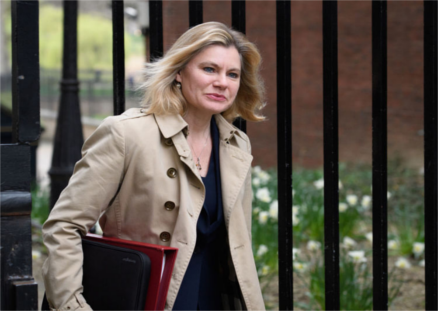
'It is not just a question of making it mandatory but also of what we should be teaching, including issues such as sexting and domestic violence.' Justine Greening (pictured) received letters from five parliamentary select committees asking for sex and relationships to be taught in schools

Sir Michael Wilshaw, who was the chief inspector of schools, has previously said that sexual bullying and sending texts about sex is 'endemic' across the country.

Speaking at the Education Select Committee in September, Greening said it was 'time they looked at how they do a better job' of teaching sex and relationship education.

She said: 'We have all seen the report that came out yesterday in relation to sex and relationship education and I think it is time that we looked to how we can do a better job.

'I also think that in the context of PSHE there is a real opportunity. I talked about advice and having the right kind of knowledge and skills.

'I think there is a real opportunity to make sure that that area plays a full role in helping our children come out of school not just knowing all the stuff that they need to know and having the right academic capabilities, but they are able to make informed choices about a variety of different areas that they will need to take a view on as they reach adulthood.'

Tuesday, 29 November 2016

Singapore Tops Among Global Education Rankings

Singapore Tops Among Global Education Rankings

Singapore

Singapore has the highest-achieving primary and secondary pupils in international education tests in maths and science.

But primary school pupils in Northern Ireland were ranked sixth at maths, the highest of any in Europe.

English children recorded improved results in a set of prestigious international maths and science exams published today, although the maths scores of English primary and secondary pupils remain far behind those in Singapore and Hong Kong.

Primary school pupils in Northern Ireland again showed remarkable maths prowess, holding the 2011 ranking of sixth overall, and the nation’s exam results were the best in Europe among the 49 countries taking part.

The four-yearly Trends in International Mathematics and Science Study (Timss) found that the performance of English pupils in the benchmark tests taken last year were remarkably similar to what it was in 2011.

England’s 13 and 14-year-olds produced their best effort in science, where England’s international rank rose from ninth to eighth out of the 39 countries taking part, keeping England ahead of the US, Canada and Australia. But England’s improved rank in science was mainly due to Finland not entering pupils in that age group, after having been the best-performing European country in 2011.

Although the latest Timss results didn’t show statistically significant improvements, they were enough for England to be ranked among the countries showing the best sustained improvements in science since the international measure was introduced in 1995.

The maths performances were once again dominated by a small group of countries led by Singapore in both age groups, and particularly in the 13-14 year-old age group, where its score was well ahead of South Korea, Taiwan, Hong Kong and Japan.

The gap in test scores between the high-performing Asian countries and the rest widened compared with the previous rounds of tests. In the primary school age group, Singapore and Hong Kong were again top in maths, followed by South Korea, Taiwan and Japan, then Northern Ireland and Russia.

While England’s test results improved slightly, its international position in 13 and 14-year-olds’ maths slipped slightly, from 10th in 2011 to 11th overall, after being overtaken by Kazakhstan. Similarly, among nine and 10-year-olds, the better exam results did not stop England’s position going from ninth to 10th, nudged down by Ireland’s rise from 17th in 2011 to ninth this year.

Sunday, 6 November 2016

James Dyson launches a new university

James Dyson launches a new university

James Dyson

Billionaire inventor Sir James Dyson is to put his money where his mouth is by helping to bridge Britain's chronic skills gap with the launch of a new university.

Sir James is ploughing £15 million over the next five years into the Dyson Institute of Technology as he looks to double his engineering workforce to 6,000 by 2020.

He told the Press Association that the private sector had a duty to help plug the engineering skills gap because the UK needed 10 times as many engineers as it did 10 years ago.

"We are competing globally with Korea, Japan, Taiwan and Singapore. It's all the major technology nations and we have got to be better than them," he said

A dearth of skilled engineers is seen throughout developed economies, Sir James said, with Asian nations outstripping the west when it came to the number of new graduates in the field.

"(The shortage of engineers is) a problem in America and Europe and has started to become a problem in Japan.

"It seems that the fast growing economies or emerging nations really recognise the value of engineering, but when you reach security there is less interest in what makes you successful."

The Dyson Institute of Technology - which will be based at Dyson's campus in Wiltshire - will take its first 25 students in September next year.

As part of the course, students will not pay any fees, be handed a salary and work alongside Dyson engineers on up-coming products.

Sir James said the idea of launching the university came after he visited the Government to "moan about the lack of engineers". He was advised to take matters into his own hands.

The degrees will initially be awarded by Warwick University, with Dyson applying for powers from the Department of Education to create a full-fledged university.

But the Dyson Institute of Technology will only gain university status if proposals in a Government whitepaper - Success as a Knowledge Economy - make their way into law.

Sunday, 30 October 2016

EU applications to the British Universities has been fallen

EU applications to the British Universities has been fallen

British Univertisies

EU applications to the UK Universities has been down dramatically by 9% according to UCAS reports.

The number of EU students applying for places on some of the most sought-after courses in the UK’s leading universities has dropped by 9%, according to Ucas, which administers university entry.

The data applies to a limited number of courses with an earlier application deadline of 15 October but the marked decline in interest from EU students will lead to fears about the damaging impact of the Brexit vote on the UK’s universities.

The data was published on Thursday and relates to applications for all courses at Oxford and Cambridge universities, as well as applications for medicine, dentistry and veterinary courses elsewhere, beginning in September 2017.

Nicola Dandridge, chief executive of Universities UK, said the full picture would only become clear after the main January deadline, which usually makes up 90% of total applications. But she linked the decline in applications to uncertainty over government financial support for EU students. “This fall does, however, highlight the importance of ensuring that prospective European applicants are made fully aware of the fees and financial support arrangements well in advance of the applications window,” she said.

“The Ucas process for accepting applications for 2017 opened on 6 September but the government guarantee on fees and financial support for EU students for 2017 entry was not provided until 11 October, only days before the October deadline. To avoid future uncertainty, we need the government to extend these transitional arrangements now for EU students considering applying for courses starting in 2018. These prospective European students will soon be starting to consider whether to apply to study at British universities.”

Just days before applications closed this month, the government finally issued a statement reassuring EU students hoping to begin their studies next year that they would continue to be entitled to the same terms and conditions as home students, with £9,000 fees and access to the student loan book for the duration of their studies.

Many in the sector complained the intervention was too late and are now urging the government to eliminate future uncertainty for potential students from Europe by extending the offer further.

The 9% decline brings to an end the recent trend for increasing numbers of EU applications to UK universities. Numbers applying for courses governed by the 15 October deadline have dropped by 620 to a total of 6,240 – reversing an 8% increase at the same point last year and a return to 2015 levels.

Contrary to the overall trend, Oxford University said it had seen a 1% increase in applications from EU students and a 4% increase overall to more than 20,000 for 2017 entry, with international applications up too. A spokesperson said: “While there has been understandable uncertainty around the implications of the UK’s exit from the EU, we are confident that students from the EU continue to see Oxford as a welcoming and attractive option for undergraduate study.”

Cambridge University reported a decline in applications from EU students, down from 2,652 last year to 2,277 this year, in the context of an overall increase in applications to 16,875.

Friday, 21 October 2016

Common misconceptions about apprenticeships

Common misconceptions about apprenticeships

apprenticeships

Apprenticeships may be one of the greatest ways to discover yourself into job training upon completion of your formal education. It is also a path to build your career and a great alternative to University.

But there are common misconceptions about apprenticeships still exists:

1. 'I don't understand what an apprenticeship is'

With university tuition fees set to rise again, an apprenticeship is your chance to earn while you learn. They can last from a year all the way up to four years or more, depending on the level of qualification, with time often spent in college to complement the on-the-job training.

A level two apprenticeship, known as an 'intermediate' apprenticeship, will last from a year to 18 months and are equivalent to five GCSEs at grades A* to C. An 'advanced' level three apprenticeship takes between 18 and 48 months to complete and is equivalent to two A-levels.

There are also higher apprenticeships available at levels four, five, six and seven. Levels four and five are equivalent to a foundation degree, level six a BA/BSc and level seven an MA/MSc.

Many companies advertise their vacancies on jobs boards such as Indeed. But many others also tweet about opportunities, so be sure to check social media.1. 'I don't understand what an apprenticeship is'

2. 'I'm too old to be an apprentice'

Realistically, this depends on the employer, but anybody of any age can be an apprentice, as long as they are over 16 and have the equivalent of five GCSEs at grades A* to C including maths and English.

Companies will pay the national minimum wage as minimum in most cases. However, the standard wage for an apprentice aged below 19, or aged 19 and over and in the first year of their apprenticeship, is £3.40 an hour. So, if you are 22 and in the first year of your apprenticeship you are entitled to a minimum hourly pay of £3.40, but in you are in your second year, you would be entitled to £6.95 an hour.

3. 'Apprenticeships are only for non-academics'

This impression is thoroughly outdated, but stems from a time when apprentices were hired by craftsmen to pass on skilled trades. Now, this couldn't be further from the truth; most, if not all, apprentices are assessed by their learning provider and their company, as well as completing regular coursework and revising to pass exams.

The rise in university tuition fees and the focus by Government on creating rigorous and quality schemes, means that apprenticeships are fast becoming a desirable route into employment. While traditional apprenticeships do still exist, other industries such as accountancy and law are also becoming increasingly accessible without the need for a degree.

4. 'They are just a way for companies to get cheap workers'

The bottom line is that employers want to hire apprentices to develop their skills and hopefully employ them full-time once qualified: they invest in their training and development. Furthermore, in light of the apprenticeship levy set to be introduced in 2017, taking on apprentices will soon become compulsory for many employers.

As stated above, apprentices can often earn more than the national minimum wage, and since apprentices are actually employed, a pay rise could be granted before they're fully qualified.

However, if money is still tight, there are a number of different schemes available that provide funds and bursaries to support apprentices. Discretionary learning support, which you can get from your learning provider if you're experiencing financial hardship, is there to help cover costs like accommodation and travel, along with paying for your course materials and equipment. Although if you are an official apprentice, you are therefore employed by a company and receive a wage so this fund is not usually available to you. However, with permission from your training provider you may apply. It would be recommended to speak directly with the local council about potential financial support for personal funding.

You can access this funding if you are aged 19 or over and studying at a college that is funded by the Government Skills Funding Agency. You cannot claim if you are in receipt of student finance or on a community learning course. The amount you are paid is dependent on your circumstances. You may also be entitled to a 30 per cent discount on travel with an apprentice oyster card, which is valid for one year. Apprentices are also entitled to an NUS card.

5. 'They aren't a route into professional fields - what if I want to be a solicitor?'

Apprentices are hired in every industry sector and many of them go on to be successful in their chosen field. If you want to be a solicitor, or work in a similar profession, university needn't be your only option.

Law firm, Mayer Brown, became the first in the City to offer the Legal apprenticeship programme. The firm offers a starting salary of £18,000 for candidates with AAB at A-level and A-C in GCSE maths and English.

6. 'I have more chance of finding employment in future if I go to university'

Whether you attend university or complete an apprenticeship, a degree-level qualification can be gained via both routes. At some companies, like the National Grid, starting salaries for apprentices can reach £25,000 - a tempting alternative to university.

Since apprentices work for a specific company, candidates have a long time to impress and prove themselves to employers. In a some cases, permanent positions may be offered by the company before the apprenticeship is complete.

If that isn't enough to convince you, according to a recent report from the Sutton Trust, apprentices with a level 5 qualification earn £50,000 more in their lifetime than someone with an undergraduate degree from a university outside of the Russell Group, taking home close to £1.5m over their career.

7. 'OK, but I can earn more working at Tesco'

There could be some truth to this, especially if you put in the hours; but working any job as a quick-fix because you need money won't necessarily provide you with the same kind of professional development and acceleration through the company as a qualification would. Chances are, your salary will stay the same.

In any case, Tesco do offer apprenticeships as well; some with a starting salary of £20,000.

*** Based on Telegraph

More kids are absent from schools for family holidays

More kids are absent from schools for family holidays

family holidays

A large proportion of pupils skipping school for family holidays has risen, official statistics have been revealed.

According to the data, 7.6 per cent of pupils missed at least half a day due to a family holiday in the autumn and spring terms 2015/16, up from 7.2 per cent the previous year.

The statistics, released by the Department for Education (DfE), include holidays approved by head teachers as well as those that were unauthorised.

In total, 400,490 pupils were absent due to unauthorised family holidays in 2015/16, compared with 362,425 the previous year.

However, the statistics show that the proportion of time missed due to authorised family holidays has remained static at 1.2 per cent.

Illness accounted for 62.2 per cent of absent sessions, followed by medical appointments at 6.5 per cent and religious observance at 1.5 per cent.

The latest figures come despite a Government crackdown on term time holidays, first introduced in autumn 2013.

Under the new rules, head teachers can only grant leave in "exceptional circumstances" and parents face a fine of £60 if they take their child out of school without approval, rising to £120 if it is not paid promptly.

This policy was challenged in May, when Jon Platt won a High Court ruling against a fine issued for taking his daughter out of school for a family trip to Florida.

After the decision, ministers urged heads to continue the new policy, and requested that the Isle of Wight council, which issued the penalty to Mr Platt, appeal against the ruling.

MPs have since criticised the “confusion"surrounding the rules, saying that many councils have dropped legal action against parents or suspended penalties altogether.

They urged clarity for the system, saying that parents and schools "need to know where they stand".

Despite coming under pressure to change the rules, Nick Gibb, the schools minister, defended the changes, citing evidence that leaving school during term time has a negative effect on GCSE grades.

A DfE spokeswoman said: "Evidence shows that every extra day of school missed can affect a pupil's chances of achieving good GCSEs.

"Over the past decade absence rates have followed a downward trend and almost 200,000 fewer pupils are now persistently missing school than in 2010, thanks to the hard work of teachers, who are insisting on improved pupil behaviour and attendance.

"Today's figures show we are continuing to improve with the number of persistently absent primary and secondary school children, which is down from 11.1 per cent last year to 10.3 per cent this year."

Jobcentre staffs has been told to help schoolchildren with writing CVs

Jobcentre staffs has been told to help schoolchildren with writing CVs

Job Centre

The Government said jobcentre staff will work with 12 to 18-year-olds in England to help them plan a future career, providing advice on writing a CV, interviews and how to obtain an apprenticeship.

The announcement, made ahead of new unemployment figures, extends a trial started earlier this year in areas including Birmingham, Lancashire, Yorkshire and London.

Employment Minister Damian Hinds said: "When I speak to employers about taking on young people I hear the same message time and time again - that qualifications are important, but they need people who can work well as part of a team, talk confidently and adapt to new situations.

"These 'soft skills' are hugely important to employers and yet many young people struggle to develop them.

"I believe passionately that our young people must get the best start in life, and that's why we are putting rocket boosters under our efforts to help young people plan for a successful career."

The latest jobless figures follow news of job losses in the railway industry.

Rail freight firm DB Cargo is planning almost 900 job losses in the UK after a "dramatic decline" in markets such as coal, representing almost 30 per cent of the company's workforce.

The German-owned firm said the rail freight industry was facing "unprecedented challenges" because of the fall in its core markets.

A number of Eurostar services are set to be cut as the company reviews its operations, which unions believe will lead to 80 job losses.

Meanwhile, research found that young people and recruiters were not connecting, as students are only aware of only one in four graduate opportunities available to them.

Sunday, 16 October 2016

Top MBA Programs

Top MBA Programs

MBA

The Master of Business Administration or MBA is a master's degree in business administration/management.

The degree was originated in the United States in the early 20th century when the country industrialized and companies sought scientific approaches to management. The core courses in an MBA program cover various areas of business such as accounting, finance, marketing, human resources, and operations in a manner most relevant to management analysis and strategy. Most programs also include elective courses.

MBA

The Economist has been published a list of valuable MBA programmes across the world.

According to the Economist, Chicago retains its place at the top ranking of full-time MBAs. It is the sixth time in seven years that it has taken first place.

Like most of Chicago's peers, nearly all of its MBA class can expect to find a job immediately after graduation, with a basic salary well in excess of $100,000. Such degrees do not come cheap. The average cost of tuition at the top 15 schools is $112,000.

America, the spiritual home of the MBA, dominates the list, accounting for 11 of the top 15 schools. The ranking is based on a mix of hard data and subjective marks given by students. It weights data according to what students tell us is important. The four categories covered are: opening new career opportunities (35% weighting), personal development and educational experience (35%), increasing salary (20%) and the potential to network (10%).

Sunday, 25 September 2016

How to raise complain agianst school

How to raise complain agianst school

complain

School plays an important part in every kids life.

However there are sometimes things might go wrong. This steps will help you how to resolve it.

Sort it out informally if possible

Whenever you can, it’s best to sort things out semi-informally via a polite discussion over the phone, in person or via email.

Since most complaints of this sort are generally relatively easy to resolve – such as reasons for being late or your child getting in trouble for a missing homework. In these cases, a simple email is most appropriate.

If you have to go the formal route…

There are three different ways you can complain, depending on where your child goes to school. Remember, though, that If you think your child is in danger, call your local council or police on 101.

1. If your child attends a state school

  • State schools include: maintained schools, academies and free schools.

  • Follow the school’s own complaints system. If you are having trouble, call them up as they are obliged to have an official complaints process.

  • Complain in writing to the head teacher

  • Complain in writing to the Governor’s board of the school

  • Complain to the Department for Education

If you are complaining about how the school is run, then contact Ofsted

2. If your child attends a private school

  • Follow the school’s complaints procedure

  • Complain in writing to the head teacher

  • Complain in writing to the school’s governing body.

Raise anything further with the Department for Education.

3. If your child attends a Special Educational Needs school

  • Talk to the school’s special educational needs co-ordinator

  • Follow the school’s complaints procedure

  • Complain to your local authority if you’re not happy with how the school has dealt with your complaint